
10 Year Rewind: Free Radicals vs. Antioxidants
Free Radicals vs. Antioxidants: The Tiny Battle Happening in Your Skin Every Day.
If you’ve spent any time in the skincare aisle, you’ve probably seen the word “antioxidant” splashed across serums, moisturizers, and masks. Vitamin C! Vitamin E! Green tea! Resveratrol!
They sound impressive—but what exactly are antioxidants protecting us from?
The answer takes us out of the beauty room for a minute and straight into chemistry.
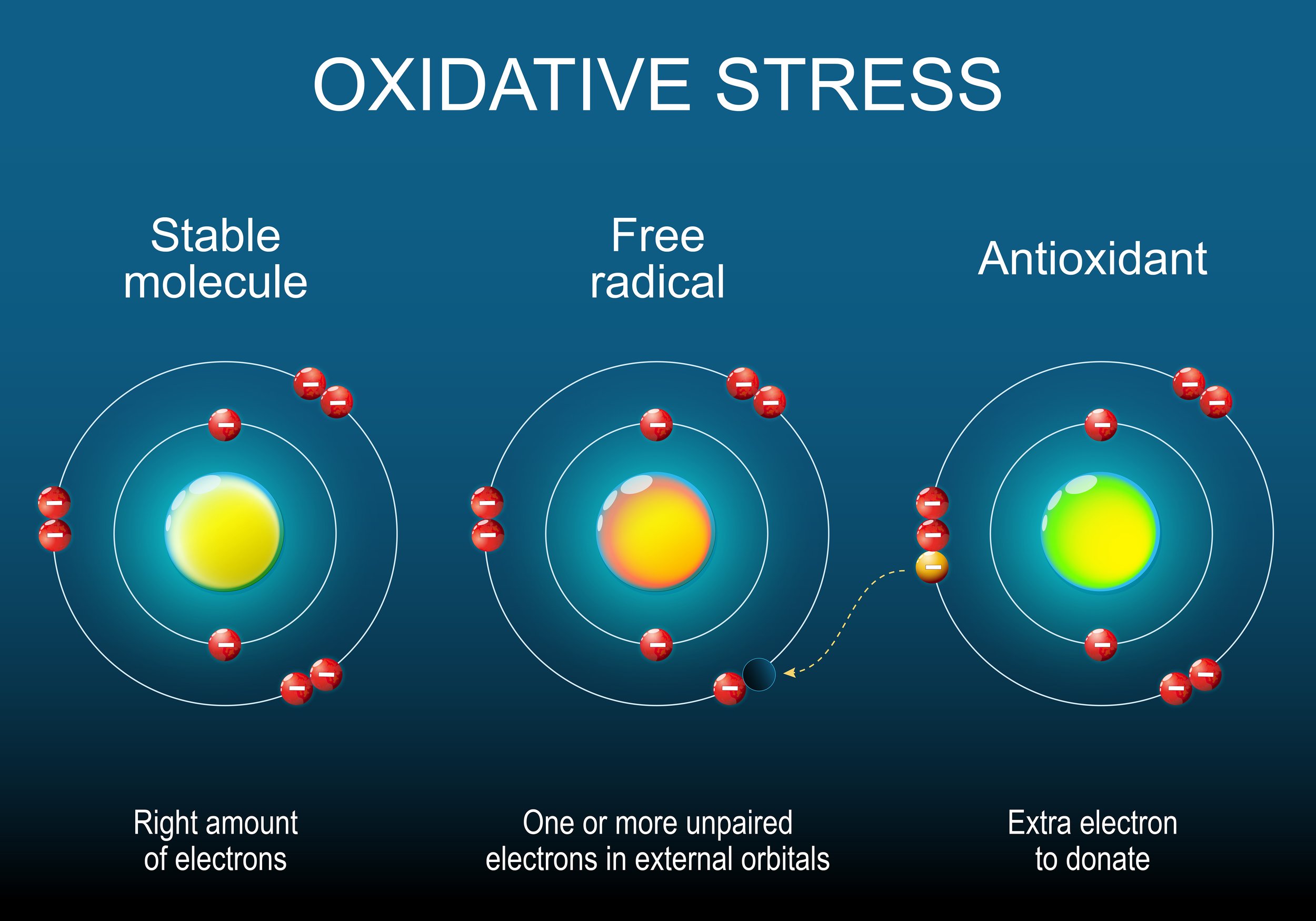
First, What Is a Free Radical? A free radical is an unstable molecule with an unpaired electron. Electrons generally prefer to exist in pairs, so a molecule with an unpaired electron can become highly reactive.
Think of it as a tiny molecular troublemaker searching for an electron.
It may react with nearby molecules, potentially creating a chain of oxidation reactions. In the skin, reactive oxygen species (ROS) can interact with important cellular components including lipids, proteins, DNA, mitochondria, and collagen structures.
But here is an important distinction: free radicals aren’t automatically bad.
Our bodies naturally produce reactive oxygen species during normal metabolism, and ROS also participate in normal cellular signaling. The problem develops when ROS production exceeds the body’s ability to control them.
That imbalance is called oxidative stress.
Where Do Free Radicals Come From?
Some ROS are produced naturally inside our cells. Skin also has the disadvantage of constantly facing the outside world.
Factors associated with increased oxidative stress in skin include:
Ultraviolet radiation
Air pollution
Cigarette smoke
Inflammation
Certain environmental chemicals
Normal cellular metabolism
For skin aging in particular, UV exposure deserves a big spotlight.
Ultraviolet radiation can dramatically increase ROS production in the skin. UVA can penetrate into the dermis, where oxidative processes contribute to pathways involved in the degradation of collagen and elastin.
In other words, some of what we see in the mirror as environmental aging begins at a level far too small for us to see.
What Does Oxidative Stress Do to Skin?
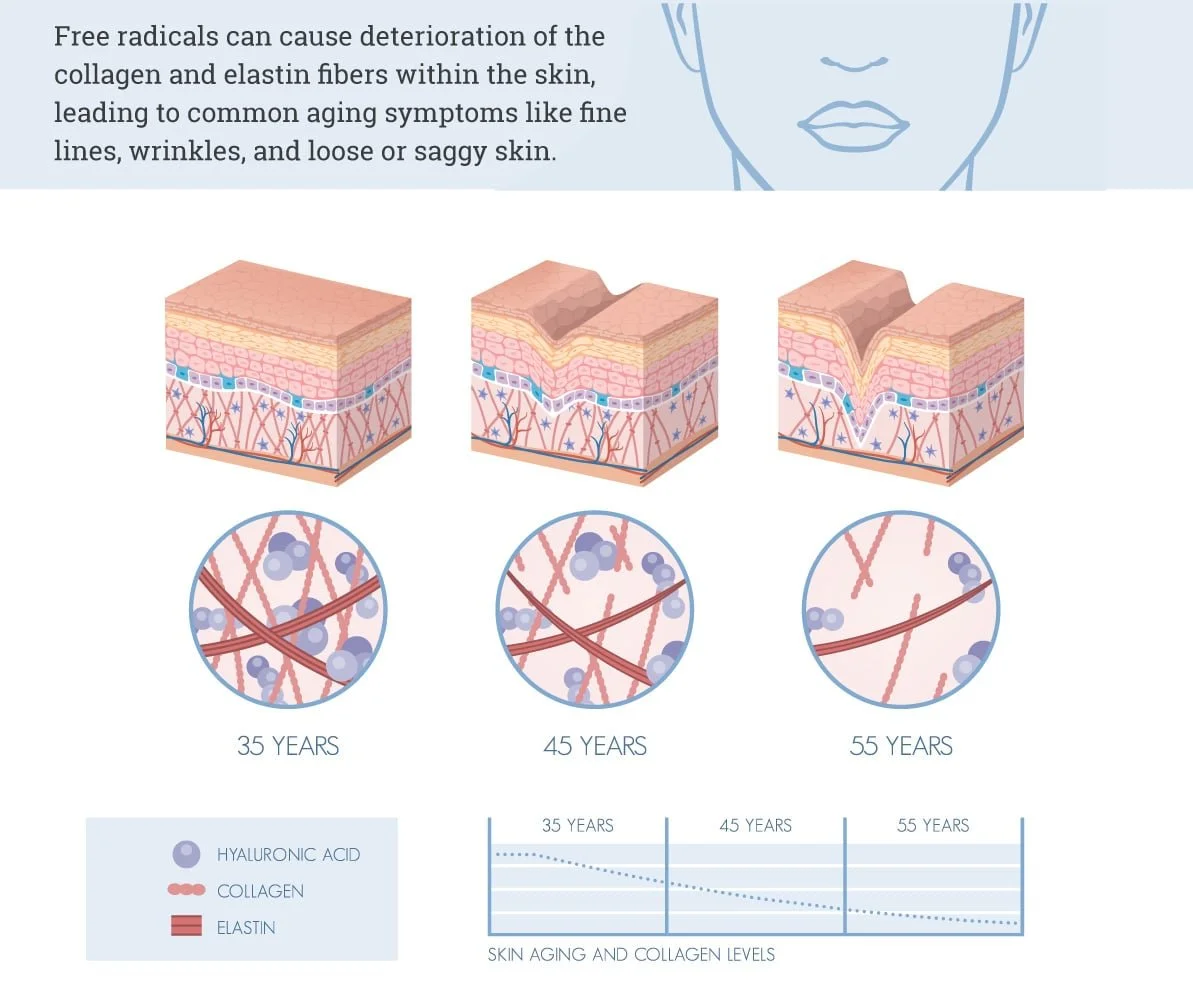
When antioxidant defenses can no longer adequately control ROS, oxidative stress can affect several important structures.
Cell membrane lipids can undergo oxidation. Proteins can be altered. DNA can sustain oxidative damage. ROS can also activate signaling pathways associated with inflammation and increased activity of matrix metalloproteinases, or MMPs—enzymes involved in breaking down components of the skin’s extracellular matrix. And guess what lives in that matrix?
Collagen.
That makes oxidative stress particularly interesting when we’re talking about photoaging, fine lines, wrinkles, loss of firmness, and changes in skin texture.
It isn’t the only process responsible for aging—far from it—but it is an important piece of the biological puzzle.
Enter the Antioxidants
Antioxidants are part of our defense system against oxidation.
Some can interact with reactive molecules in ways that help stop damaging chain reactions. Our skin already contains an impressive built-in antioxidant network, including enzymes such as superoxide dismutase, catalase, and glutathione peroxidase, along with non-enzymatic antioxidants.
We can also obtain antioxidant compounds through our diet, and certain antioxidants can be incorporated into topical skincare formulations.
Vitamin C
Vitamin C, or ascorbic acid, is one of skincare’s best-known antioxidants.
Beyond its antioxidant activity, vitamin C has an important relationship with collagen synthesis. It can also help regenerate oxidized vitamin E, which is one reason antioxidants are often more interesting as a network than as isolated ingredients.
Vitamin E
Vitamin E is a lipid-soluble antioxidant and is particularly important in protecting lipids against oxidation. Research has also shown that UV exposure can deplete vitamin E in skin.
Vitamin C and vitamin E can therefore make an especially interesting antioxidant partnership.
Other Antioxidants Skincare research has examined many additional antioxidant compounds, including polyphenols, carotenoids, coenzyme Q10, green-tea compounds and resveratrol.
But there’s an important catch.
Simply putting the word antioxidant on the front of a bottle doesn’t guarantee that a product will perform beautifully on your skin.
Formulation Matters
This is one of my favorite parts of skincare science because the ingredient list isn’t the entire story.
For a topical antioxidant to be useful, factors such as its stability, concentration, formulation, packaging and ability to reach the appropriate area of the skin can matter.
Some antioxidants are notoriously unstable. Exposure to light, oxygen, heat, or an unsuitable formulation can affect them before they ever have a chance to benefit your skin.
So when choosing an antioxidant product, don’t automatically assume that more antioxidants means better skincare.
A thoughtfully formulated product matters.
Antioxidants Are Not Sunscreen
This deserves its own section.
An antioxidant serum does not replace sunscreen. Antioxidants can complement a photoprotection routine by helping address oxidative processes, but sunscreen remains a primary defense against ultraviolet exposure.
I like to think of it this way:
Sunscreen helps reduce the attack. Antioxidants help strengthen the defense.
That’s a much more scientifically accurate approach than treating either one as a magic shield.
The Bottom Line
Free radicals aren’t skincare villains that need to be completely eliminated. They’re part of normal biology.
The goal is balance.
When reactive oxygen species overwhelm our natural antioxidant defenses, oxidative stress can contribute to molecular damage, inflammation and processes involved in skin aging.
That’s why antioxidants have earned a legitimate place in modern skincare—not because they’re trendy, but because there is real chemistry behind them.
So the next time you smooth on your vitamin C serum, remember: you’re not just participating in a beauty ritual.
You’re dabbling in a little molecular chemistry before breakfast.
And personally, I think that makes skincare a whole lot more interesting.